
-
Services
Our Services
- Panel Beating
- Dent Removal
- Car Spray Painting
- Bumper Repair
- Windscreen Replacement
- Fleet Repairs Perth
- Hail Damage Perth
- Luxury Car smash repair
- Car Mechanic Perth
- Car Scratch Repair Perth
- Ceramic Coating
- Car Insurance Claim
- Minor Accident Repair
- full car respray Perth
- Car repainting perth
- colour change respray
- paint restoration Perth
Our Locations
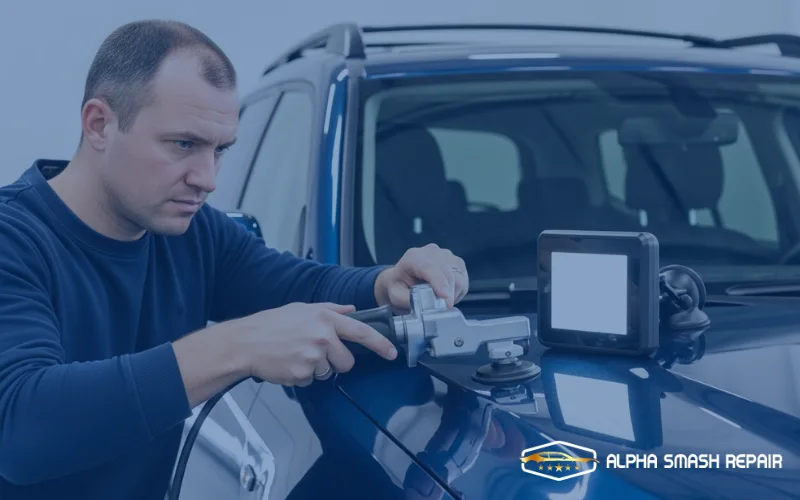
When you're looking at a car in your garage or shop, knowing how to identify paint defects properly can make the difference between a successful correction and a costly mistake. Today we're going to take you through everything you need to know about identifying paint defects using LED inspection techniques.
Understanding Your Vehicle: Every Car is Different
Each car that comes through your door is going to be different, and you're looking for different things on each one in particular. Here's what you need to understand right from the start:
Brand New Vehicles
If you get a brand new Ferrari, the biggest thing you're looking for are sanding marks because all of them have it. Same thing whether you're dealing with an Aston Martin or McLaren - they're all going to have sanding marks and they're typically going to have holograms from a rotary buffer not used the right way.
Older, Neglected Vehicles
When you're dealing with an older car that's had a lot of neglect, you know you're going to run into other kinds of things. You'll be looking for:
- Blend marks (especially if it's had some repainting)
- Holograms from poor polishing work
- Regular swirls from improper washing
- Individual scratches from daily wear
- Solvent pop (if there's been repaint work)
The Inspection Process: Getting Started Right
Before you touch any polishing equipment, you need to do your homework. The inspection process involves several critical steps:
1. Paint Thickness Measurements
You want to take paint thickness measurements to know what areas have been repainted. This tells you what you can and can't do on the finish. Combined with your visual inspection, these readings will guide your entire approach.
2. LED Light Inspection
Using your LED light as part of the inspection process is crucial. You'll find that some panels are just about as bad as you can imagine - they've got a little bit of everything in them.
Common Paint Defects: What You're Looking For
Regular Swirls: The Everyday Enemy
Most cars suffer from standard swirls from years of:
- Washing it wrong
- Drying it wrong
- Wiping it down with a quick detailer instead of properly washing the car
- Using automatic car washes
What You'll See: Just standard swirls that make the paint look swirled, stained, and like it's just not black anymore (or whatever the original color was).
The Fix: These everyday defects are relatively easy to remove with a multi-stage polishing process - heavier compound to start, fine finishing to end it with.
Heavy Scratches: Know Your Limits
You'll often find heavier scratches in areas where people incorrectly handle the car. Remember: you only use the door handle to shut the door - you don't touch on the sides, you don't touch up on the panels unless you want a car in bad condition.
The Rule of Thumb: If you can feel that scratch with your fingernail, it's probably too deep to fully correct.
Why You Shouldn't Chase Deep Scratches:
- You remove way too much material
- It becomes a "one and done" situation
- You risk burning through the clear coat
- You create potential for clear coat failure down the road (cracking, peeling, fading)
- The next person who polishes it might be the unlucky one that burns through
Think Long-Term: You have to think about the future of the vehicle, not just what you're detailing for today. Are you detailing for next week, or are you detailing for the next 10-20 years of that car?
Swirls vs. Holograms: Know the Difference
There's a lot of confusion about swirls and holograms. Here's what you need to know:
Regular Swirls
- Appearance: Consistent spider webbing pattern
- Cause: Improper washing, drying, using wrong towels, automatic car washes
- Pattern: Stays consistent when viewed with inspection light
Holograms
- Appearance: Have "arms" or "tentacles" reaching out from them
- Cause: Rotary buffer used incorrectly
- Pattern: As you move your point of view, those arms or tentacles move with the light
- Location Clue: If you see regular swirls, then holograms, then regular swirls again, somebody worked on just that panel
Pro Tip: If you don't see holograms everywhere on the car, it's a good indication there's been some bodywork. That's when you need to start taking a closer look at areas for burn marks where they may have gone too aggressive.
Using LED Inspection Light: Your Best Friend
When you're doing a quick inspection and walking around the car with your LED light, you can quickly identify:
- Pattern Recognition: Regular swirls vs. holograms vs. individual scratches
- Work History: Which panels have been worked on previously
- Severity Assessment: What's correctable and what isn't
- Planning Strategy: What approach you need for each area
Setting Realistic Correction Goals
The 95% Rule
When you're doing restorative level work, you should aim for maybe 95% correction. You might think "wait, why not go for full correction?"
Here's the truth: There's no such thing as a full correction detail, at least if you're dealing with OEM paint. It's just not practical to try to get rid of all defects.
Why 95% is Smart Business
- Some stuff is going to be too deep to fully correct
- Some areas the machine just can't get to completely
- Your 95% is somebody else's 100% usually
- The stuff that's left over, people are going to have a really hard time seeing
Don't Be a Hero
Don't think in terms of 100% - don't kill yourself chasing perfection because that's when mistakes happen. When you try to be the hero and you're chasing and chasing a defect, guess what? You've gone too far, you're through the paint, and now you need to pay to have panels repainted.
Professional Inspection Checklist
Do This: | Don't Do This: |
Take paint thickness measurements first | Skip the inspection phase |
Use LED inspection light systematically | Chase every defect to 100% removal |
Document different defect types on each panel | Use the same approach on every car |
Set realistic correction expectations with clients | Ignore paint thickness readings |
Plan your approach based on what you find | Try to be the hero with deep scratches |
Consider the long-term health of the paint | Forget about future paint longevity |
Different Defects Require Different Approaches
Understanding what caused the defects helps you choose the right correction method:
Swirls (Everyday Use)
- Cause: Improper washing and drying
- Solution: Multi-stage polishing process
- Difficulty: Relatively easy to remove
Holograms (Poor Rotary Work)
- Cause: Rotary machine used incorrectly
- Solution: Sometimes one-step polishing with DA, sometimes multi-stage
- Variables: Depends on how aggressive they were, how dirty their pad was
Individual Scratches
- Assessment: Fingernail test for depth
- Approach: Make it look better, but don't chase complete removal if too deep
- Goal: Improvement without compromising paint integrity
The Reality of Paint Correction
When you identify all your defects and have a good idea of what you can and can't do, you'll realize that some defects are going to be there to last. The key is making informed decisions about:
- What's worth correcting
- What's too risky to attempt
- How much material you can safely remove
- What the customer's expectations should be
Future-Proofing Your Work
Remember, you're not just working for today - you're working for the life of that vehicle. Every micron of clear coat you remove affects:
- Future correction possibilities
- Long-term paint durability
- Clear coat integrity over time
- The next detailer's options
Key Takeaways for Successful Paint Defect Identification
- Every car is different - adjust your inspection approach accordingly
- LED lights are essential for proper defect identification
- Paint thickness measurements guide everything you can safely do
- Know the difference between swirls and holograms - they require different approaches
- The fingernail test is your friend for scratch depth assessment
- 95% correction is the realistic goal - don't chase perfection at paint's expense
- Think long-term - preserve the paint for future years, not just immediate results
Conclusion: Inspection Guides Everything
Proper inspection and understanding of defects guides your correct polishing approach. Different defects require different polishing techniques and care. The balance between correction and paint preservation is key to quality detailing that lasts.
When you can identify what you're looking at, understand what caused it, and know the safest way to address it, you're well on your way to becoming a professional who can deliver results that last for years, not just weeks.
Remember: the goal isn't to remove every single defect - it's to dramatically improve the appearance while preserving the long-term integrity of the paint. Master the identification process, and the correction becomes much more straightforward and successful.